The Wensum and Yare Valleys: Why Norwich Roofs Stay Damp Enough for Moss
Moss removal Norwich roofs need more often than most people expect, and the reason has less to do with the tiles themselves than with where the city sits. Norwich grew up in the bowl where the River Wensum loops around the old core before joining the River Yare a little further downstream near Trowse and Whitlingham. That valley geography, combined with a climate that spreads its rain out over many grey days rather than a few heavy downpours, keeps roofs damp for longer than towns further inland. This guide looks at why the Wensum and Yare valleys create such good growing conditions for moss, which parts of the city feel it most, and what a sensible cleaning routine looks like as a result.
The quick answer: Norwich sits low in the Wensum and Yare river valleys, which trap moisture and slow down drying after rain, especially on shaded or low-lying roofs. Regular soft washing and moss removal, timed to the local climate rather than a fixed calendar date, is the most effective way to keep tiles clear in a city built where two rivers meet.
1. Two Rivers Meeting in a Bowl of a City
Norwich developed in the valley of the River Wensum, which winds through the city centre in a wide loop before flowing on to meet the River Yare near Trowse and Whitlingham on the eastern edge of the city. This confluence sits in relatively low-lying ground compared with the surrounding Norfolk countryside, and that bowl shape means damp air and river mist tend to linger rather than clear quickly, particularly on autumn and winter mornings.
Homes closer to the river corridors, from the water meadows near the cathedral to the streets around Thorpe Hamlet and Trowse, sit in the dampest part of this bowl. Roofs here simply have more moisture in the air around them for more of the year than a roof on higher ground out towards Norwich's edges.
2. Norwich's Rainfall Is Not Heavy, But It Lingers
It might seem surprising, but Norwich and the surrounding Norfolk area are not among the wettest parts of the country. Average annual rainfall for the city is generally recorded at somewhere around 650 to 680mm, which is lower than many other parts of the UK. What matters more for moss growth is how that rain is spread out, with roughly 120 days of measurable rainfall across the year rather than the total volume.
That pattern, frequent light rain and overcast spells rather than short heavy storms, is exactly what moss and algae prefer. A roof does not need to be soaked constantly to stay damp, it just needs to be topped up often enough that it never fully dries between showers, and Norwich's climate does precisely that for large parts of the year.
3. Moss Removal Norwich Roofs Need When Valleys Trap Moisture
Once moss has established itself in these damp conditions, gentle but thorough moss removal is what actually protects the roof rather than leaving it to grow. Moss holds water against the tile long after the surrounding air has started to dry, which means a moss-covered roof in the Wensum valley can stay wet for noticeably longer than a clean one nearby.
Soft washing followed by careful manual clearing of any stubborn clumps deals with this without the risk that comes from pressure washing, which can force water under tiles that are already sitting in a naturally damper environment. Our guide to caring for Norwich's pantile and period roofs covers why older tiles in particular need this gentler approach.
4. Why Riverside and Low-Lying Streets Suffer Most
Not every part of Norwich experiences the valley effect equally. Streets that sit close to the Wensum's loop through the city centre, and areas nearer the Yare confluence around Trowse, tend to hold damp air for longer after rain than roofs on the higher ground towards the outer suburbs. Gardens backing onto the river, or properties near Whitlingham Country Park to the southeast, often report moss returning faster than homes on drier, more exposed sites elsewhere in the city.
This does not mean higher ground is immune. It simply means the valley streets tend to need a slightly closer eye kept on them, since the starting conditions for moss growth are that bit more favourable.
5. The Trees That Line Norwich's River Paths
Norwich's river corridors are lined with mature trees, from the willows and planes along the riverside walks to the wooded stretches near Whitlingham and the old water meadows. Falling leaves, seeds and general organic debris from these trees settle on nearby roofs and in gutters, adding a steady supply of nutrients that moss and algae spores can use to establish themselves.
Combined with the shade these same trees cast over roofs close to the riverbank, it is easy to see why homes near Norwich's green river corridors tend to need attention more often than roofs in more open, sunnier parts of the city.
6. Older Homes Near the Rivers and Damp
Many of the oldest parts of Norwich grew up hugging the river for practical reasons, trade, water access and the mills that once lined the Wensum. That means a good number of the city's historic pantiled roofs sit precisely in the parts of the city most affected by valley damp. Combining an older, more fragile tile with a naturally wetter microclimate is exactly the situation where gentle, well-timed moss removal matters most, rather than aggressive cleaning that risks the tile itself.
7. How Moss Actually Takes Hold in These Conditions
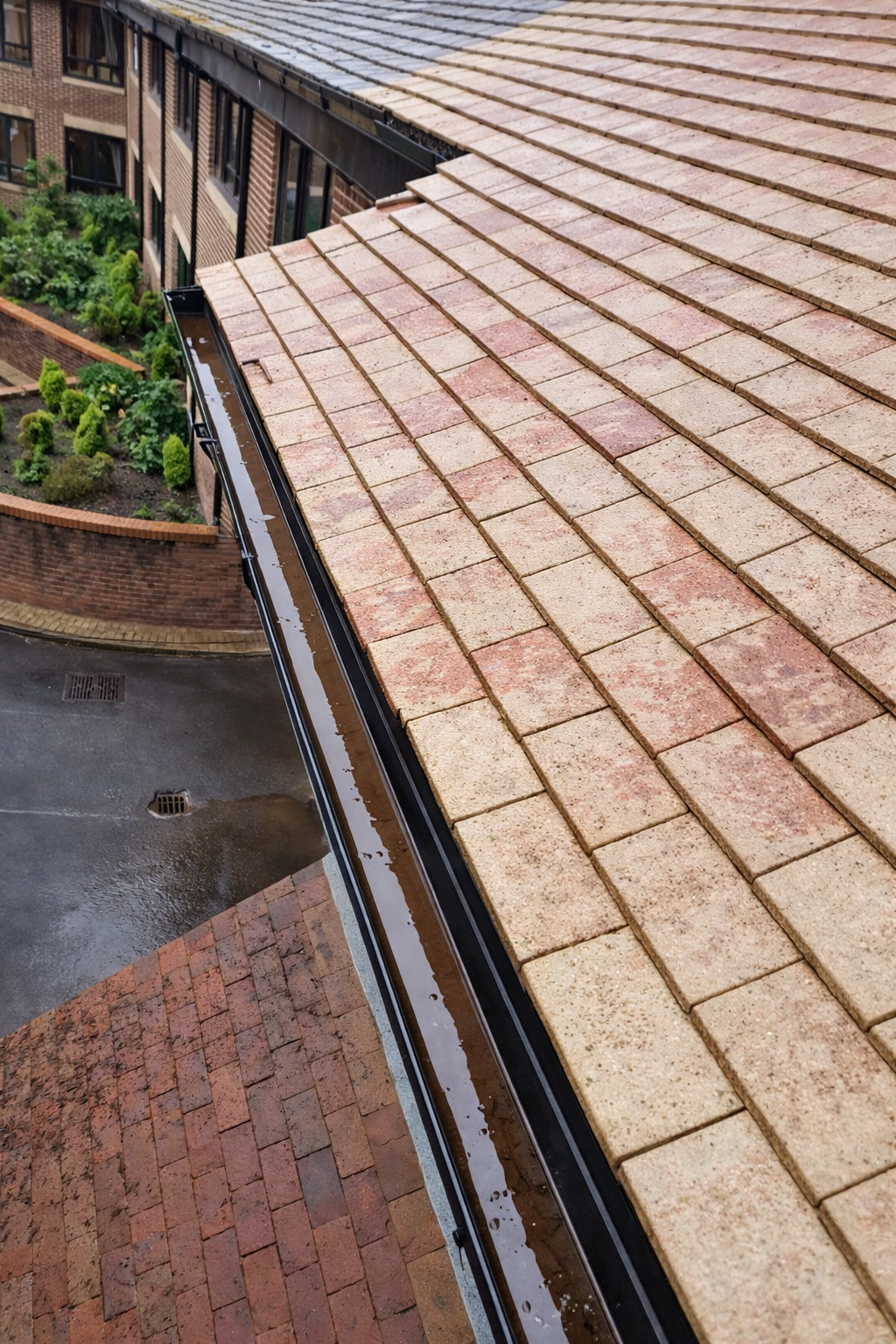
Moss needs moisture and a foothold to establish itself, and a shaded, damp roof surface in a river valley gives it both. Spores land on the tile surface, and where humidity stays high for long enough, they root into the tiny irregularities on an older or slightly weathered tile before spreading outward as a cushion that holds even more water against the roof. Our article on the biology behind moss, algae and lichen on Norwich roofs explains this process in more detail, including why different growths need different treatment.
8. A Cleaning Routine Built Around Norwich's Climate
Given how the Wensum and Yare valleys behave, the most effective routine is one that accounts for location as much as roof age. Properties near the river corridors, in shaded streets, or close to mature trees generally benefit from a slightly more frequent check than homes on higher, more exposed ground elsewhere in the city. A soft wash timed to the roof's actual condition, rather than a rigid annual date, keeps moss from building up to the point where it starts holding real water against the tiles.
- Location matters as much as age: roofs near the Wensum and Yare hold moisture longer than those on higher ground.
- Rain pattern, not rainfall total: Norwich's frequent light rain suits moss better than a wetter but stormier climate would.
- Trees add fuel: riverside trees drop organic debris that feeds moss and algae growth.
- Older roofs near water need care: historic pantiles close to the river combine fragility with extra dampness.
- Soft washing protects the tile: gentle moss removal avoids forcing water under tiles that are already sitting in damp conditions.
Frequently Asked Questions
Why does my roof stay mossy even though Norwich isn't that rainy?
Look at how often it rains rather than how much. Norwich has frequent light rain spread across many days a year, which keeps roofs damp for longer than a smaller number of heavy downpours would.
Are homes near the river worse affected by moss?
Generally yes, check whether your property sits close to the Wensum or Yare or under mature trees, since these locations tend to hold damp air and organic debris more than roofs on higher, more open ground.
Does moss removal need to happen every year?
Not necessarily, base it on inspection rather than a fixed schedule. A shaded, riverside roof may need more frequent attention than one on a dry, sunny plot elsewhere in the city.
Can I just leave moss alone if it isn't causing visible problems?
It is better not to. Left in place, moss holds water against the tile and can eventually lift tiles or contribute to damp patches, so early, gentle removal is usually cheaper than waiting.
What does moss removal typically cost in the UK?
Costs vary by roof size, pitch, access and how established the moss has become, so most reputable companies will want to inspect a roof before giving a firm figure rather than quoting a flat UK-wide price.
Is pressure washing a faster way to deal with moss near the river?
It might look faster, but it is not recommended. Pressure washing can force water under tiles that are already sitting in a naturally damper environment, which raises the risk of leaks rather than reducing it.
Roof sitting a little too close to the Wensum or Yare?
Ben's Roof Cleaning works across Norwich and Norfolk with over 15 years of experience dealing with exactly this kind of valley damp. Get in touch or call 0160 333 7383
for a free, no-obligation quote.
Norwich's Rivers Shape More Than the City's Streets, They Shape What Its Roofs Need
The same water meadows and river bends that give Norwich much of its character are also the reason moss finds such a comfortable home on so many local roofs. Understanding that connection, rather than treating every roof the same regardless of where it sits, is what separates a cleaning routine that actually works from one that just delays the problem. A little extra attention for riverside and shaded streets keeps tiles clear and protects the roof underneath them for years to come.