Caring for Conservatory and Porch Roofs in Norwich
Conservatories and glazed porches are everywhere across Norwich, from Victorian additions bolted onto Golden Triangle terraces to the glass extensions common on newer homes around Costessey and the outer suburbs. They let in light and add space, but their roofs are often the most neglected part of the house. Because polycarbonate, glass and low-pitch felt roofs behave so differently from the main roof above them, ordinary roof cleaning Norwich homeowners arrange for their main tiles rarely extends to the conservatory or porch, and that gap in care shows. This guide looks specifically at what conservatory and porch roofs need in Norwich's damp, tree-lined setting, and why treating them as an afterthought tends to cost more in the long run.
The quick answer: conservatory and porch roofs need cleaning more often than a main tiled roof, typically once or twice a year, because their low pitch and light-sensitive materials collect debris faster and lose more from staining and shading if it is left in place.
1. Roof Cleaning Norwich Style: Why Conservatory Roofs Get Dirty Faster
A typical Norwich house roof is pitched steeply enough that rain does a reasonable job of washing loose debris downward. Conservatory and porch roofs are usually far shallower, sometimes only a few degrees off flat, which means leaves, pollen, algae and general grime simply sit where they land rather than being carried off by rain. Add Norwich's damp, valley-influenced climate, sitting as the city does close to the Wensum and Yare, and the result is a surface that stays wet for longer after each shower, giving algae and moss spores more time to establish than they would on a steeper slope.
2. Light Loss Is the Real Cost of a Dirty Conservatory Roof
The most obvious consequence of a neglected conservatory roof is not structural, it is the loss of light the room was built for in the first place. A layer of algae, moss or general grime across polycarbonate or glass panels can noticeably dim a room, especially through Norwich's shorter winter days. Homeowners who invested in a conservatory specifically to bring more natural light into the house are often surprised at how much of that benefit is lost once the roof has gone a couple of years without attention.
3. Moss and Debris Where the Conservatory Meets the House
The junction where a conservatory or porch roof meets the main house wall is a particularly vulnerable point. Leaves and grit collect against the flashing here, much as they do around chimney stacks, and if left unchecked can hold moisture against the seal for months at a time. On older Norwich properties, particularly period homes in conservation areas where a conservatory or porch has been added to an existing pantile or slate roof, this junction was not always designed with modern glazing in mind, which makes regular clearing even more important. Our article on Norwich's pantiles and period homes covers more on how older roof junctions behave.
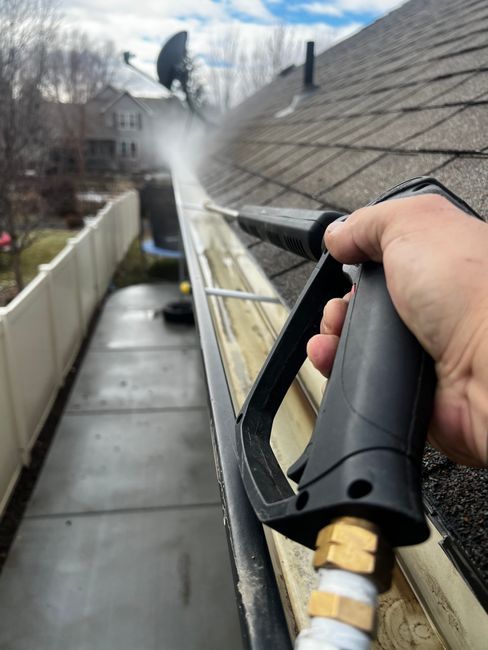
4. Guttering on Conservatories Is Often Undersized
Many conservatories, particularly those added to Victorian and Edwardian houses across Thorpe Hamlet and the streets closer to the city centre, were fitted with smaller guttering than the main house, simply because the roof area being drained is smaller. That smaller gutter blocks far more easily, and once it does, water can back up under the roof edge rather than running off cleanly. Keeping this guttering clear is arguably more important than on the main roof, precisely because there is less capacity to absorb a blockage before problems start.
5. Polycarbonate, Glass and Felt: Different Materials, Different Care
Not every conservatory or porch roof in Norwich is built the same way, and the right care depends on the material.
- Polycarbonate roofs scratch more easily than glass, so cleaning needs a gentler approach than scrubbing, with soft brushes and controlled water flow rather than anything abrasive.
- Glass conservatory roofs show grime and algae staining more visibly than other materials, which makes regular light cleaning more worthwhile purely for appearance.
- Felt or fibreglass porch roofs hold moss in a similar way to a main tiled roof, and benefit from the same gentle removal approach used on pitched roofs.
- Glazing bars and seals between panels collect the most debris of all, since they interrupt the smooth run-off that would otherwise carry leaves and grit away.
6. How Shading From Norwich's Street Trees Affects Conservatories
Streets across the Golden Triangle, Eaton and parts of Costessey are known for their mature trees, and while that shading is pleasant in a garden, it works against a conservatory roof. Shaded glazing dries more slowly after rain, giving algae longer to establish, and falling leaves and seed pods land directly on a roof that has little pitch to shed them. A conservatory positioned under or near mature trees typically needs cleaning more often than one in a more open, sunnier spot, simply because of how much longer moisture sits on the glazing.
7. When a Porch Roof Signals a Bigger Roof Problem
Because porch roofs are usually small and low, they are often the first place moss or algae becomes visible from ground level, well before the same growth would be noticeable higher up on the main roof. A green tinge developing on a porch roof is worth treating as an early warning sign rather than an isolated problem, since it usually reflects the same damp, shaded conditions affecting the rest of the property. Checking the main roof at the same time as dealing with the porch is generally worthwhile. More detail on how this kind of staining develops is covered in our piece on black streaks on Norwich roofs.
8. Kerb Appeal and the Front-Facing Porch Roof
Porch roofs sit directly in the eyeline of anyone approaching the front door, which makes them disproportionately important for how tidy a property looks from the street. A stained, moss-covered porch roof can undercut an otherwise well-kept Norwich home, particularly in the sought-after NR postcodes where kerb appeal matters for both everyday pride in a property and, eventually, its resale value. Our article on kerb appeal in Norwich goes into this in more detail.
9. Building a Simple Care Routine for Conservatory and Porch Roofs
A sensible routine for most Norwich conservatories and porches involves a light clean once or twice a year, timed for spring or early summer when the glazing can dry fully afterwards, plus a quicker gutter check in autumn alongside the main house gutters. Checking the junction between the conservatory or porch roof and the main wall for trapped debris at the same time catches problems before they reach the flashing. Treating these smaller roofs as part of the same maintenance routine as the main roof, rather than a separate afterthought, is the simplest way to keep them performing and looking as they should.
Frequently Asked Questions
How often should a conservatory roof be cleaned in Norwich?
Once or twice a year generally works well, with shaded or heavily tree-lined properties needing the more frequent end of that range.
Can a conservatory roof be pressure washed?
It is best avoided on polycarbonate and older glazing, since high pressure can scratch panels or force water into seals. A gentler, controlled approach protects the material far better over time.
Does a dirty conservatory roof actually affect light levels indoors?
Yes, noticeably. A build-up of algae, moss or general grime across glazing can visibly dim a room, particularly during Norwich's shorter winter daylight hours.
What does cleaning a conservatory or porch roof in Norwich typically cost?
Costs vary with roof size, material, access and the amount of build-up present, so it is best confirmed with a specific quote after a look at the property rather than assumed from a general figure.
Should the conservatory gutter be cleaned separately from the main house gutter?
It is worth treating as its own task, since conservatory guttering is often smaller and blocks more easily than the main house system.
Is moss on a porch roof a sign of a wider problem?
It can be an early indicator of the same damp, shaded conditions affecting the main roof, so it is generally worth having both checked together rather than treating the porch in isolation.
Noticed staining on your conservatory or porch roof?
Ben's Roof Cleaning has spent over 15 years keeping roofs, gutters and tiles clear across Norwich and Norfolk. Get in touch or call 0160 333 7383
for a free, no-obligation quote.
A Conservatory or Porch Roof Deserves the Same Care as the Roof Above It
Conservatory and porch roofs across Norwich are too often treated as separate from the main roof, when in practice they face the same damp, shaded, tree-lined conditions and often show the effects sooner. Keeping glazing, seals and small gutters clear is a smaller job than a full roof clean but one that protects both the light a conservatory was built to provide and the tidy first impression a porch gives every visitor arriving at the front door.