
Autumn and Winter Roof and Gutter Prep for Norwich Homes
The clocks go back, the Golden Triangle's plane trees start shedding in earnest, and somewhere on a quiet street in Thorpe Hamlet or Eaton a gutter is already starting to overflow. Autumn is the season Norwich roofs and gutters take the most punishment, and getting ahead of it with proper gutter cleaning Norwich homeowners can trust makes the difference between a dry winter and a stream of water running down an external wall. This guide walks through what actually needs doing to a Norwich roof and gutter system between September and the first hard frosts, and why the city's setting in the Wensum and Yare valleys makes this preparation more important here than in drier, less leafy parts of the country.
The quick answer: the priority for autumn and winter prep in Norwich is clearing gutters and downpipes before the main leaf fall in October and November, checking for moss that has thickened over summer, and dealing with both before the first frosts make roof work impractical.
1. Why Autumn Hits Norwich Roofs Harder Than It Looks
Norwich is often described as sitting in a bowl formed by the Wensum and Yare river valleys, and that geography matters more in autumn than at any other time of year. As temperatures drop and mornings turn misty, moisture lingers longer over the city than it would on higher, more exposed ground. Combine that with the sheer volume of leaf litter from Norwich's mature street trees, especially through the Victorian terraces of the Golden Triangle and the leafier gardens of Eaton and Costessey, and gutters fill far faster than most homeowners expect. What looks like a light scattering of leaves in September can become a solid, waterlogged mat by November if nothing is done. We go into more depth on why this valley setting keeps roofs damp in our piece on the Wensum and Yare valleys.
2. Gutter Cleaning Norwich Homes Need Before the Main Leaf Fall
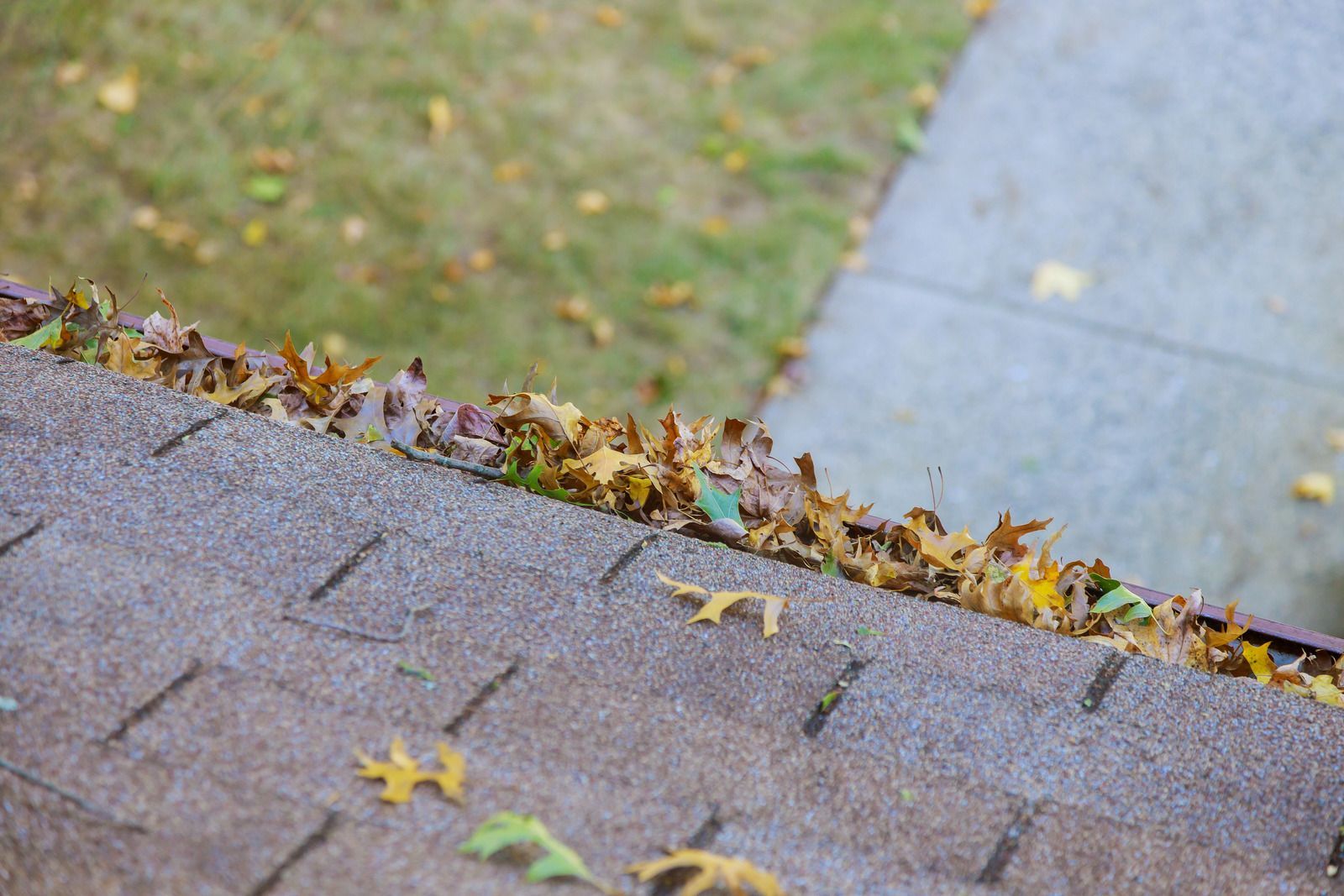
The single most useful piece of autumn prep is timing. Clearing gutters too early, in early September, means they simply fill up again before winter. Leaving it until December often means the gutters have already overflowed for weeks, sending water down brickwork and, in older solid-walled Norwich properties, potentially into the wall itself. The sweet spot for most of the city is mid to late October, after the bulk of the leaf fall has started but before the coldest, wettest weeks set in. A thorough gutter cleaning Norwich visit at this point clears silt, moss debris and leaves in one pass, and checks that downpipes are running freely rather than just clear at the opening.

3. Roof Valleys and Chimney Junctions: Where Debris Collects Unseen
Gutters are the obvious collection point, but roof valleys, the internal angles where two roof slopes meet, and the junctions around chimney stacks trap just as much debris and are far less visible from the ground. On Norwich's older terraces, where chimney stacks are common even on houses that no longer use open fires, leaves and moss build up around the base of the stack and can hold water against the flashing for weeks at a time. Left unchecked over a wet winter, this is a common source of small leaks that are disproportionately expensive to trace once they have worked their way into a loft space.
4. Moss Growth After a Damp Summer
Norfolk's summers are not the county's wettest season, but even a handful of warm, humid weeks is enough for moss that took hold in spring to thicken considerably by autumn. Checking north-facing slopes and any roof shaded by neighbouring buildings or trees, common throughout Thorpe Hamlet and the older streets closer to the city centre, is worth doing before winter locks that growth in place under frost and rain. Moss that goes into winter already established tends to spread faster once spring humidity returns, so an autumn check and, where needed, a professional moss removal visit gets ahead of the following year's problem rather than reacting to it. Our detailed look at why this happens is covered in the biology behind a green Norwich roof.
5. What Norwich's Older Pantile Roofs Need Before Winter
Norwich's long trading history with the Low Countries left the city with a strong legacy of pantile roofing, particularly across its older residential streets and conservation areas. Pantiles interlock in a curved profile that, while distinctive and part of the character of many period Norwich homes, can trap leaves and grit in the overlap between tiles more readily than flatter concrete tiles. Before winter, it is worth having these areas checked specifically, since a blocked overlap holds water against the tile edge and, over repeated freeze-thaw cycles through a Norfolk winter, can accelerate wear on tiles that may already be several decades old. More on caring for these roofs specifically can be found in our article on Norwich's pantiles and period homes.
6. Downpipes, Drainage and Solid Walls
Many of Norwich's older properties, particularly in conservation areas recognised by Norwich City Council, were built with solid brick or flint walls rather than the cavity walls used in newer construction. Solid walls are more vulnerable to penetrating damp when guttering overflows repeatedly, since there is no cavity to stop moisture reaching the internal wall face. Checking that downpipes discharge properly, away from the base of the wall and into a working drain, is a small task that prevents a much bigger problem from developing quietly over a wet winter.
7. What to Leave for Spring
Not everything needs doing in autumn. A full roof clean is generally better left until late spring or early summer, when the roof can dry out properly afterwards and moss regrowth is slower during the following drier months. Attempting a full clean in November, when the roof rarely dries fully between showers, tends to be less effective and less pleasant for anyone doing the work. Autumn and early winter prep should focus on debris removal, gutter clearance and spotting anything urgent, with the deeper clean scheduled once the weather turns.
8. Signs Your Norwich Roof or Gutters Need Attention Before Winter
A short walk around the outside of the house on a dry autumn day usually reveals most of what needs doing.
- Gutters visibly sagging or pulling away from their brackets under the weight of trapped leaves and water, a common sight on older Norwich terraces by late October.
- Water marks or green staining below gutter joints , which usually indicate an overflow point that needs clearing rather than a leaking joint.
- Moss cushions thickening on north-facing or shaded slopes , particularly on roofs close to mature trees in the Golden Triangle, Eaton or Costessey.
- Damp patches appearing on ceilings near external walls or chimney breasts, often the first visible sign of a blocked gutter or damaged flashing.
- Visible plant growth or moss around chimney stack bases , which holds moisture against flashing through the wettest months.
9. Building a Simple Autumn and Winter Checklist
Pulled together, a sensible autumn routine for most Norwich homes runs roughly as follows: a full gutter clear in mid to late October, a check of roof valleys and chimney junctions for trapped debris, a look at any shaded or north-facing slopes for moss that has thickened since spring, and a check that downpipes are running clear before the first hard frost. Anything more involved, such as a full roof clean, is best scheduled for the following spring rather than attempted in the wet, short days of a Norfolk winter. This keeps the roof functioning properly through the season without the risk of working on cold, brittle tiles.
Frequently Asked Questions
When is the best time to clean gutters in Norwich before winter?
Mid to late October generally works best, after most of the leaf fall has begun but before the coldest, wettest weeks of the year set in.
Should moss be removed in autumn or left until spring?
Light moss growth is often fine to leave until a spring clean, but thicker moss on shaded slopes is worth having checked before winter, since it can spread further once wetter, colder weather settles in.
Is it safe to clean a roof in winter in Norfolk?
It is generally best avoided. Cold, wet conditions mean tiles rarely dry properly and can become more brittle, so most professional roof cleaning work in Norwich is scheduled for spring and summer instead.
What does gutter cleaning in Norwich typically cost?
Pricing depends on the size of the property, the number of downpipes, and how much debris has built up, so it is best obtained as a specific quote after a site visit rather than assumed from a general figure.
Do older Norwich properties need extra care before winter?
Often yes. Solid-walled buildings common in the city's conservation areas are more vulnerable to penetrating damp from overflowing gutters than newer cavity-walled homes, so keeping drainage clear matters more.
How can I tell if my gutters are already blocked?
Watch them during an ordinary rain shower. Water spilling over the front edge, rather than flowing along the gutter and down the downpipe, is a clear sign of a blockage that needs clearing.
Want your roof and gutters ready before the leaves fall?
Ben's Roof Cleaning has spent over 15 years keeping roofs, gutters and tiles clear across Norwich and Norfolk. Get in touch or call 0160 333 7383
for a free, no-obligation quote.
A Little Preparation in Autumn Saves a Much Bigger Job in Spring
Norwich's damp valley setting, combined with its heavily tree-lined older streets, means autumn is not a season a roof or gutter system can afford to be ignored. Clearing gutters at the right time, checking valleys and chimney junctions for trapped debris, and dealing with thickening moss before winter locks it in place all add up to a roof that copes far better with a Norfolk winter. The alternative, discovering a damp patch on a ceiling in January, almost always costs more time and money than the autumn prep that would have prevented it.