Black Streaks on Norwich Roofs: What Causes Them and How to Remove Them
Roof cleaning Norwich homeowners search for is often prompted by one specific sight: dark, almost sooty looking streaks running down a roof slope, usually starting near the ridge and fanning out towards the gutter. It looks like pollution or dirt, but in most cases it is neither. Those streaks are a living organism, a type of algae that has found the exact conditions it needs on a Norwich roof, and understanding what it actually is changes how it should be dealt with. This guide explains what causes black streaking on roofs across the city, why some slopes are affected far more than others, and how it can be removed safely without damaging the tiles underneath.
The quick answer: Black streaks on a Norwich roof are almost always caused by a type of algae that thrives on shaded, damp surfaces and feeds partly on the limestone filler in some roofing materials. A professional soft wash removes it effectively and safely, while pressure washing or scraping the streaks off risks cracking tiles and rarely gets rid of the problem for good.
1. What Is Actually Causing Those Black Streaks
The dark streaking seen on so many roofs is typically caused by a type of blue-green algae that has adapted to living on roof surfaces, feeding on the minerals in the tile or granules and reproducing through airborne spores that travel easily from one roof to a neighbouring one. It is not soot, mould, or simple dirt, even though it is often mistaken for all three.
This algae has a dark, almost black pigment that shields it from ultraviolet light, which is part of why it survives so well on an exposed roof surface that gets sun as well as rain. As colonies grow and spread, they create the familiar streaked pattern that runs down the roof in the direction water flows.
It tends to start small, often as a faint grey smudge near a ridge tile or chimney stack, and can take a year or more to become the obvious dark streak most homeowners eventually notice from the street. By the time it is clearly visible, the colony has usually had a good while to establish itself across a fair area of the roof, which is why catching it early with a light clean makes the job considerably easier than waiting until the streaking is severe.
2. The Roof Cleaning Norwich Homes Need Targets the Cause, Not Just the Surface
Because this is a living organism rather than surface grime, simply hosing a roof down or wiping visible streaks away rarely solves the problem for long. Roof cleaning Norwich properties benefit from most is a proper soft wash treatment that actually kills the algae at the surface and beneath it, rather than just knocking off the visible growth and leaving spores behind to regrow within a season or two.
This is one of the clearest examples of why the right method matters more than simply getting a roof to look clean on the day the work is finished.
3. Why Shaded, North-Facing Slopes Suffer Most
Algae needs moisture to thrive, and it struggles far more on roof slopes that get plenty of direct sun and dry out quickly after rain. Across Norwich, this means north-facing pitches, and roofs shaded by taller neighbouring buildings or mature trees, are consistently the first and worst affected by black streaking. In the tighter Victorian streets of areas like the Golden Triangle, where terraces sit close together, some slopes barely see direct sunlight for large parts of the day, which gives algae exactly the damp, shaded conditions it needs to establish and spread.
4. Norwich's Climate Plays Its Part Too
Norwich's weather pattern, frequent light rain spread across roughly 120 days a year rather than occasional heavy downpours, keeps roof surfaces damp for longer stretches than a drier, sunnier climate would. That pattern suits algae just as well as it suits moss, which is why the two problems often turn up on the same roof, sometimes on the same slope. Our guide to why Norwich's river valleys keep roofs damp enough for moss covers the wider climate picture behind both problems.
5. How Streaking Spreads Between Neighbouring Roofs
Because the algae reproduces through airborne spores, it is common to see black streaking appear on several roofs along the same street within a similar timeframe, particularly where properties are close together and share similar shading. A roof that has recently been cleaned can pick up spores from an untreated neighbouring roof, which is one reason streaking sometimes seems to come back quickly even after a good clean, especially in dense residential streets.
6. The Right Way to Remove Black Streaks
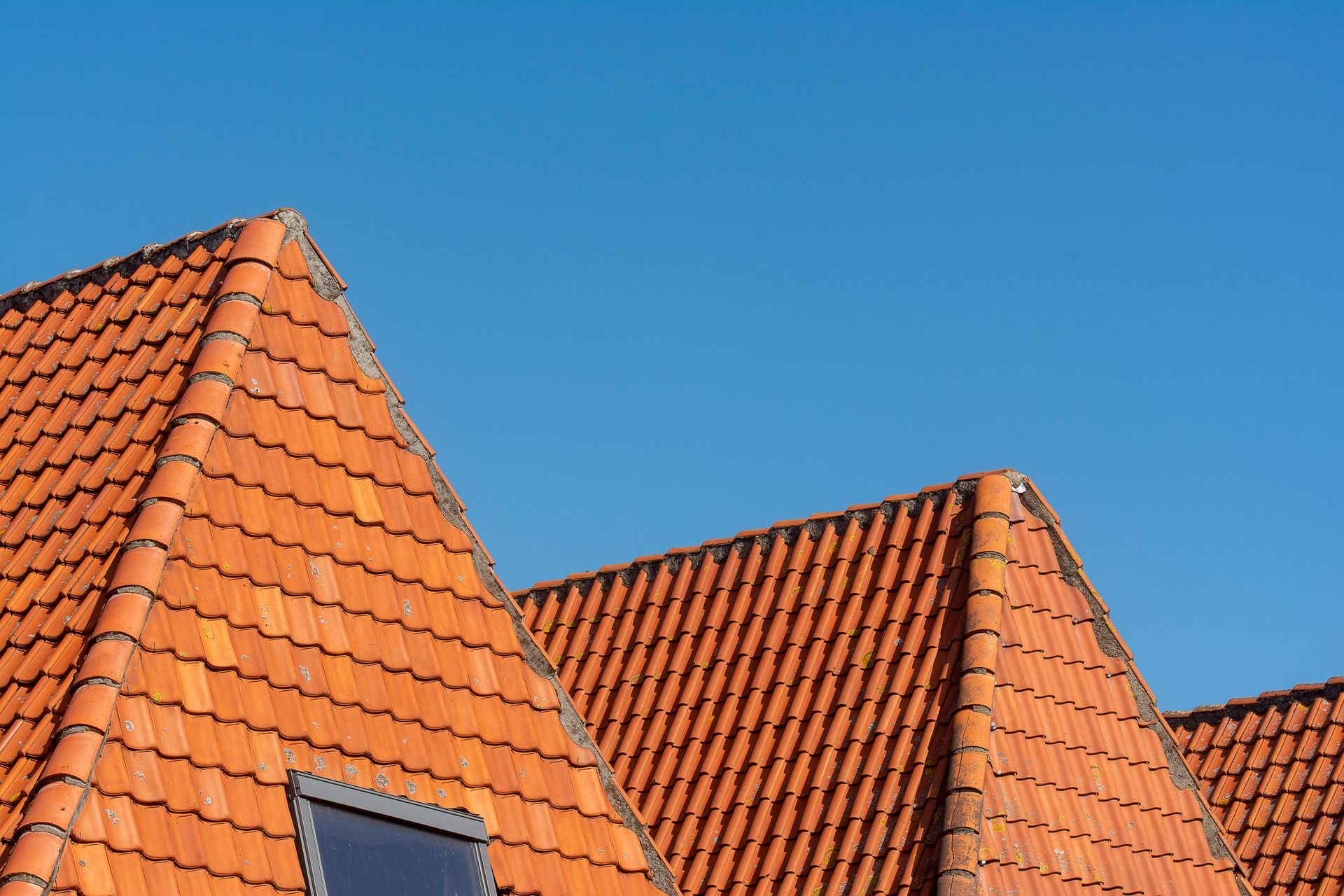
A proper soft wash, low pressure water combined with a solution designed to break down algae at the surface, is the standard professional approach, and it is considerably gentler on the tile than pressure washing. High pressure jet washing can blast away the protective granules on some tile types and force water beneath overlapping tiles, which is a particular risk on the historic pantiled roofs common across the city. Our article on caring for Norwich's pantile and period roofs goes into more detail on why these older tiles need a gentler approach.
7. Why DIY Attempts Often Make Things Worse
Bleach and household cleaning products are sometimes used in an attempt to tackle black streaking, but they can damage roof coatings, harm nearby plants when they run off into gutters and drains, and still fail to kill the algae at the root if applied without the right dwell time or concentration. Scrubbing at streaks with a stiff brush risks lifting granules or cracking older, more brittle tiles, which turns a cosmetic problem into a structural one.
8. Telling Black Streaks Apart From Moss and Lichen
It is worth knowing the difference, since the three problems are often confused but do not always need identical treatment. Moss grows as a raised, cushion-like mat, usually green, and tends to favour flatter areas, valleys and the gaps between tiles rather than the open slope. Lichen forms flatter, crusty patches that can be grey, yellow or orange and bonds tightly to the tile surface. Black streaking, by contrast, runs in vertical lines following the path water takes down the roof, and stays flat and dark rather than raised or textured.
All three can appear on the same roof at once, particularly on an older, shaded property, and a competent cleaner will usually treat them slightly differently even within a single soft wash visit, since each responds a little differently to the same cleaning solution.
9. Preventing Streaks From Coming Straight Back
No treatment makes a roof permanently immune to algae, since spores are constantly circulating between neighbouring roofs and trees. Keeping gutters clear so water does not pool and encourage regrowth, trimming back overhanging branches where possible, and scheduling a check every year or two rather than waiting for streaks to become obvious again all help extend the time between full cleans.
Properties in particularly shaded streets, or those backing onto mature trees or a churchyard, tend to need this rhythm more often than roofs on open, sunny plots, simply because the underlying conditions that favour algae growth never really go away in those spots.
- It is algae, not dirt: black streaking is a living organism that spreads through airborne spores.
- Shaded slopes are worst affected: north-facing roofs and those in tight streets dry out slowly and stay vulnerable.
- Soft washing kills it properly: pressure washing removes visible streaks without addressing the cause.
- Neighbouring roofs matter: spores travel easily between properties on the same street.
- Gutters affect regrowth: clearing them regularly reduces the standing moisture algae needs to return.
Frequently Asked Questions
Are black streaks on my roof a sign of damage?
Not usually on their own. Treat streaking as a cosmetic and biological issue first, though left untreated for years it can contribute to wear on some tile surfaces.
Why does my roof have streaks when my neighbour's doesn't?
Compare the aspect and shading of each roof. A north-facing or heavily shaded slope will usually develop streaking well before a sunnier, more exposed roof nearby.
Can I remove black streaks myself with a hose and brush?
It is best avoided. Scrubbing can damage tiles and rarely removes the algae fully, so the streaking often returns within a season.
Will cleaning stop the streaks from ever coming back?
Not permanently, but it resets the clock. Regular gentle cleaning keeps streaking from building up to the point where it is obvious from the street.
What does professional roof cleaning to remove streaks cost?
It depends on roof size, pitch, access and how established the algae has become, so it is worth having a roof assessed rather than assuming a single UK-wide price applies.
Is pressure washing ever appropriate for black streaks?
Generally no. It is better suited to some hard, modern surfaces, but on most residential roofs, particularly older tiles, soft washing is the safer and more effective option.
Noticed dark streaks creeping down your roof?
Ben's Roof Cleaning works across Norwich and Norfolk with over 15 years of experience safely removing algae streaking without damaging the tiles beneath it. Get in touch or call 0160 333 7383
for a free, no-obligation quote.
Black Streaks Are a Biology Problem, and They Need a Biology Solution
Treating black streaking as simple dirt leads to methods that either fail to fix it or damage the roof trying. Recognising it for what it actually is, a living, spreading organism that thrives in Norwich's shaded, damp conditions, points towards the same answer every time: a proper soft wash that kills the growth at the source, followed by the kind of regular light maintenance that keeps it from building up again unnoticed.